1. Heat anchor
Secure greenhouse, processing, aquaculture or district-heat demand with a realistic hourly/seasonal profile.
A proposed Interior network designed around sun, clean electricity, agricultural heat demand and a north–south optical corridor.
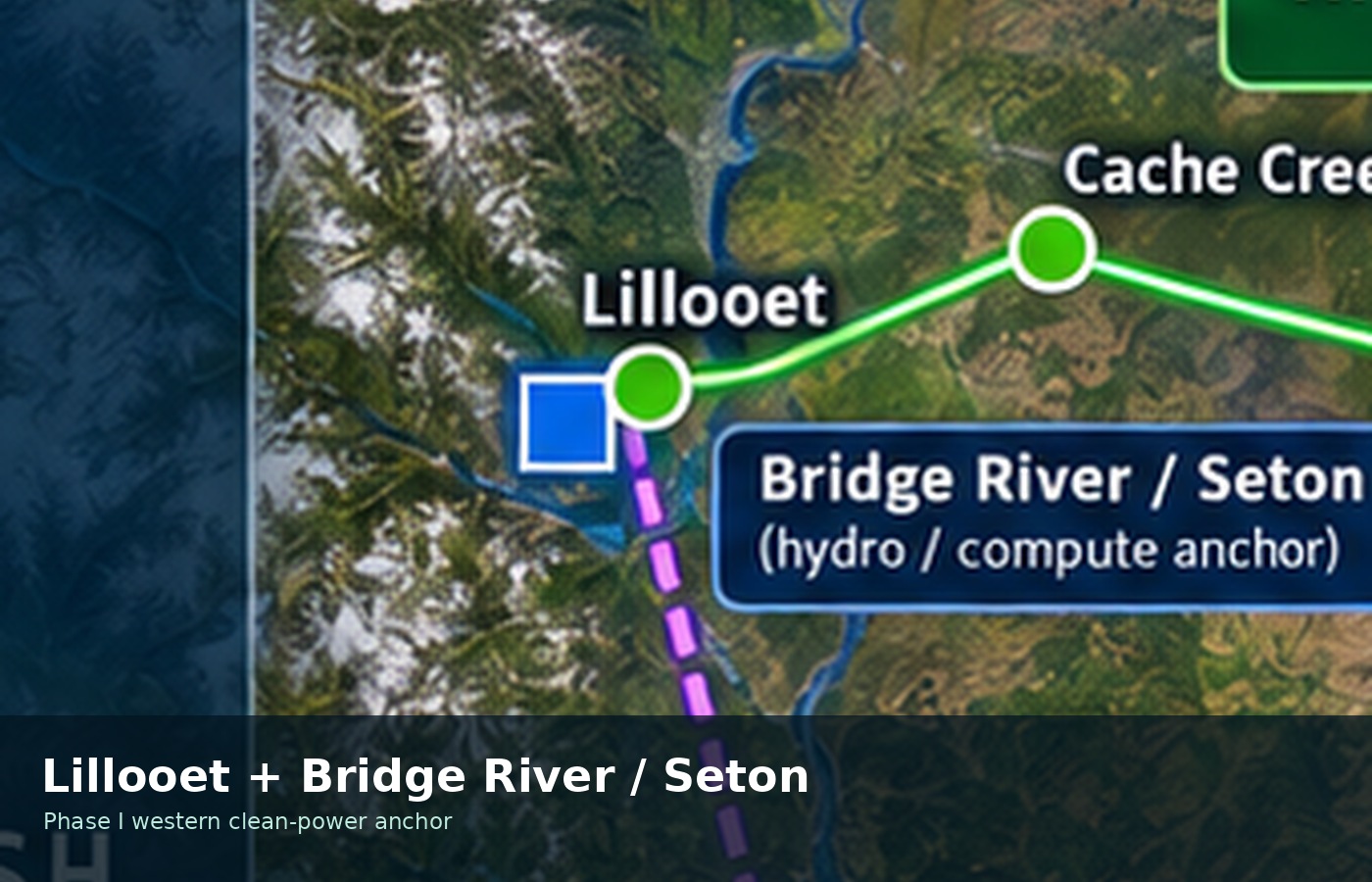
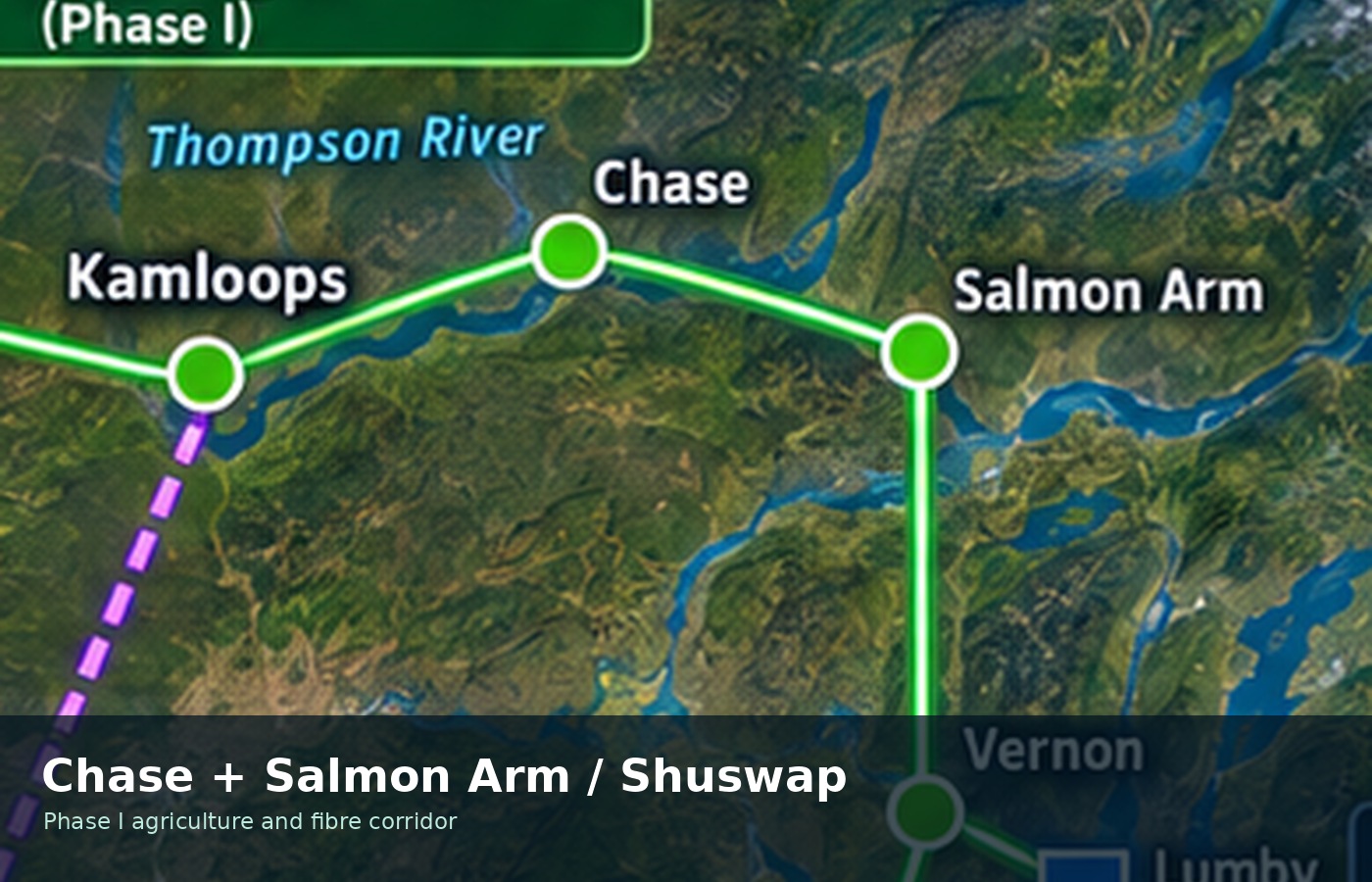
The Thompson–Okanagan is described by the Province as having hot, sunny, dry summers and some of the lowest annual rain and snowfall in southern Canada. That makes supplementary solar materially more useful here than in the Lower Mainland, while the hydro-dominated provincial grid remains the primary firm electricity source.
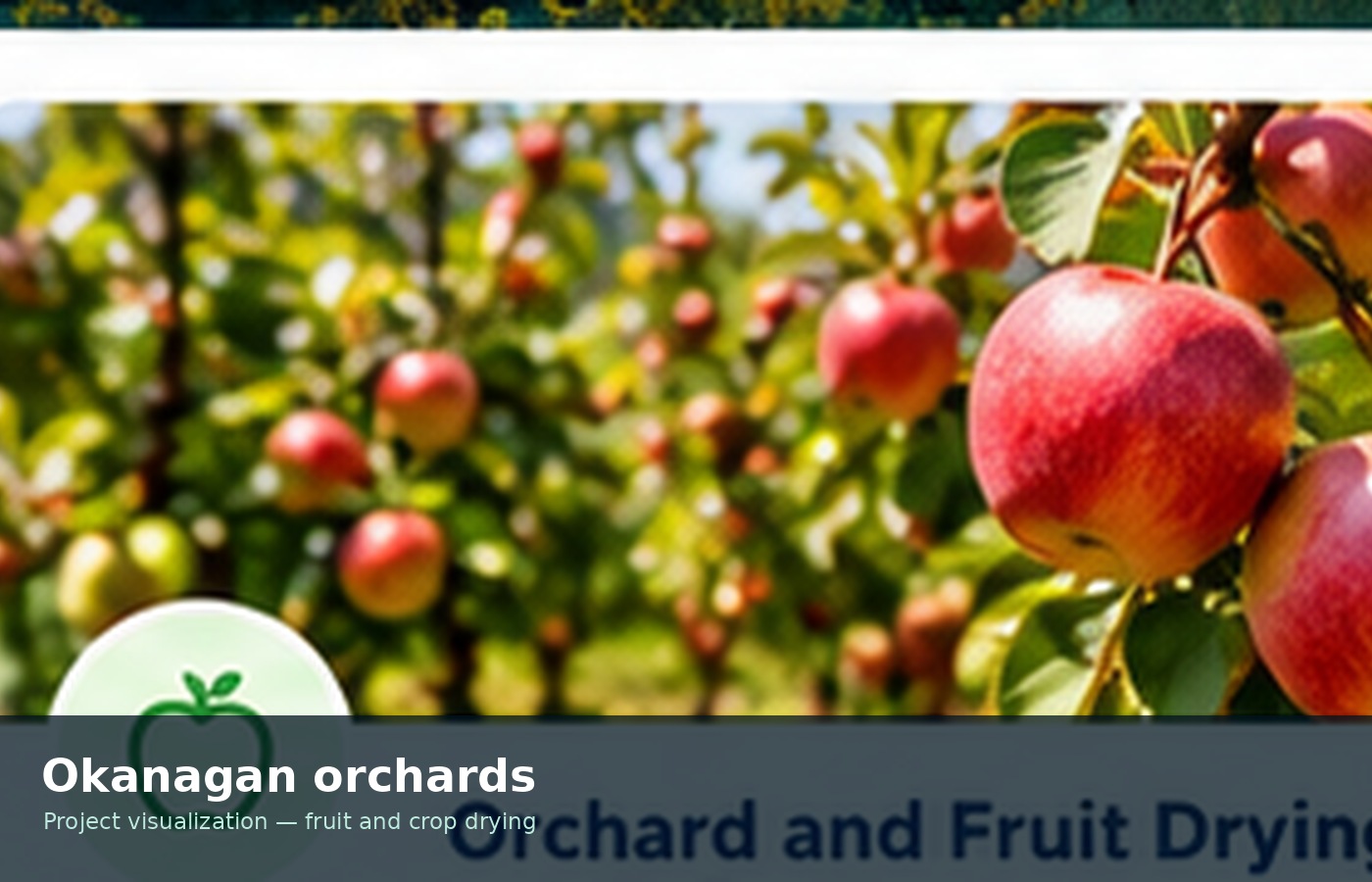
The corridor also already contains major fruit, vineyard and food-processing activity. The objective is not to replace those industries, but to add controllable winter heat, protected growing space, cold-chain capacity and digital infrastructure.
These are planning ranges, not reserved utility capacity. They intentionally remain broad until interconnection, land, fibre and heat-demand studies are completed.
| Community | Concept range | Priority heat uses | Role |
|---|---|---|---|
| Lillooet / Seton | 5–15 MW | Greenhouses, drying, aquaculture | Fraser/Seton energy corridor; sunny semi-arid climate |
| Cache Creek | 5–10 MW | Protected agriculture, food drying | Interior junction; compact starter node |
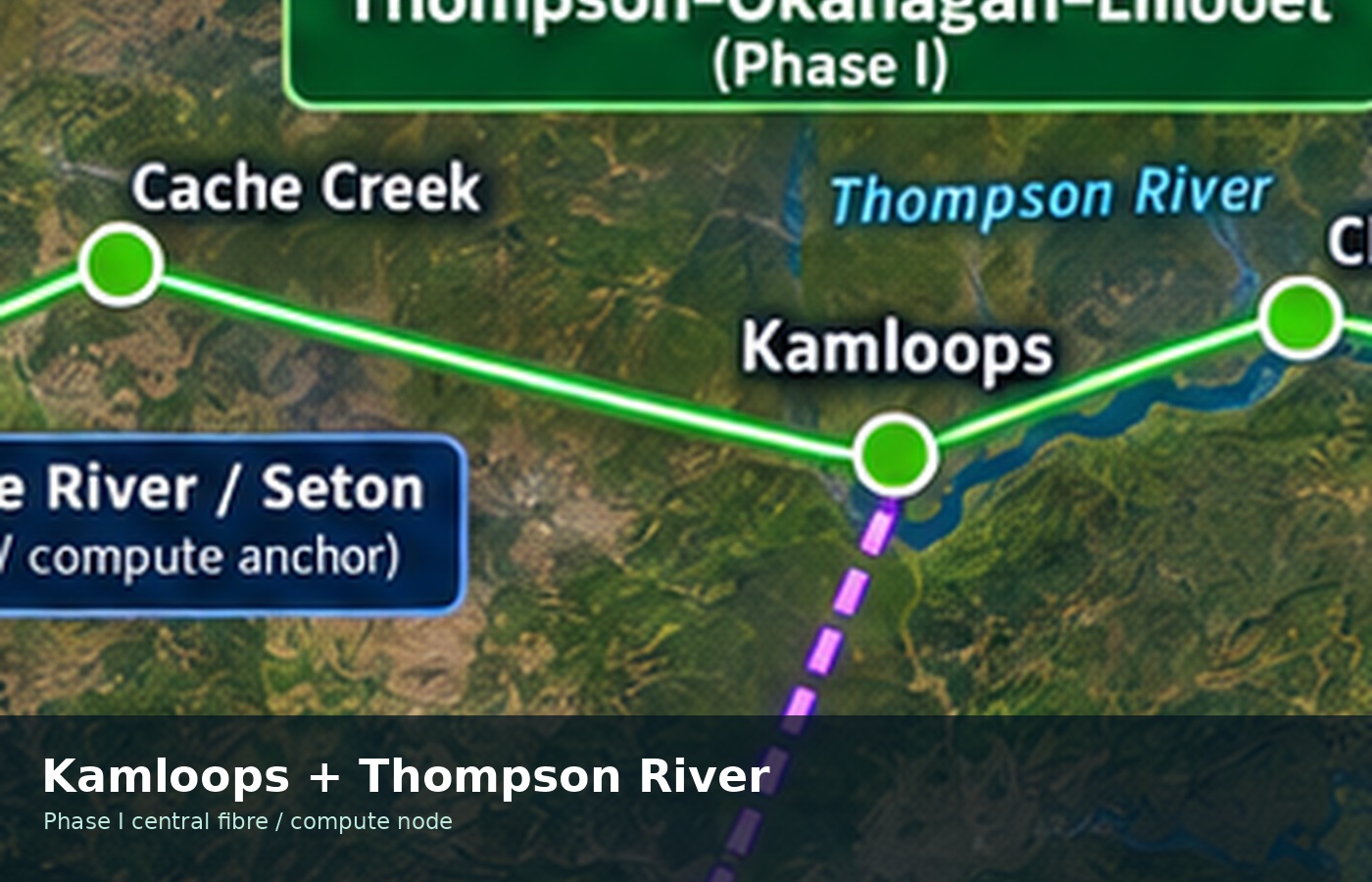
| Kamloops | 15–30 MW | Large greenhouse, processing, district heat | Regional anchor and major fibre/power hub |
| Chase | 5–10 MW | Greenhouse, aquaculture | Smaller modular heat sink near Shuswap corridor |
| Salmon Arm | 8–15 MW | Greenhouse, food processing | Agricultural basin and Shuswap logistics |
| Vernon | 10–20 MW | Greenhouse, cold-chain, processing | North Okanagan agricultural centre |
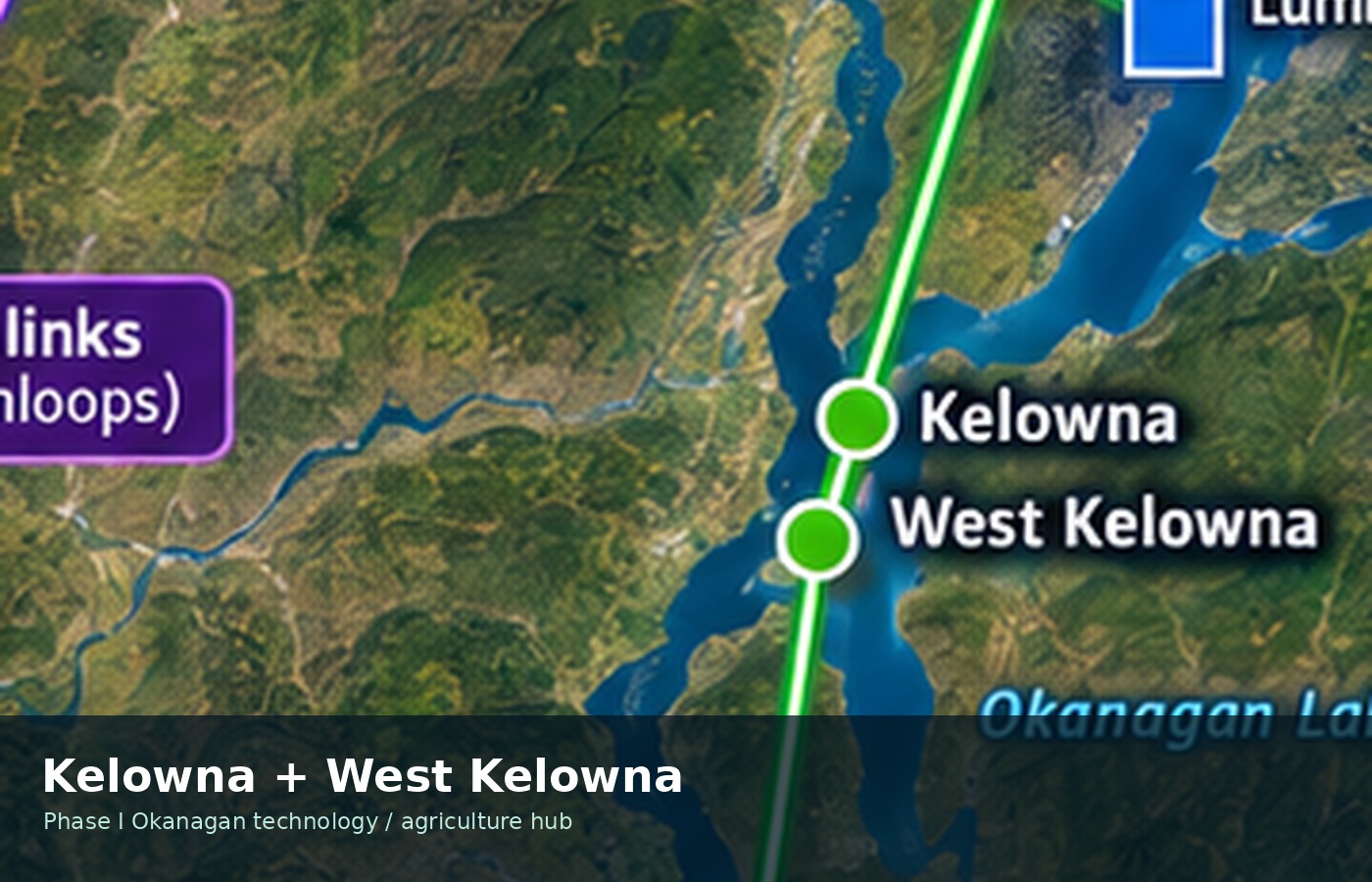
| Kelowna | 15–30 MW | Greenhouse, food/tech campus | Largest Okanagan demand and fibre anchor |
| Penticton | 10–20 MW | Greenhouse, drying, cold-chain | South Okanagan processing and logistics |
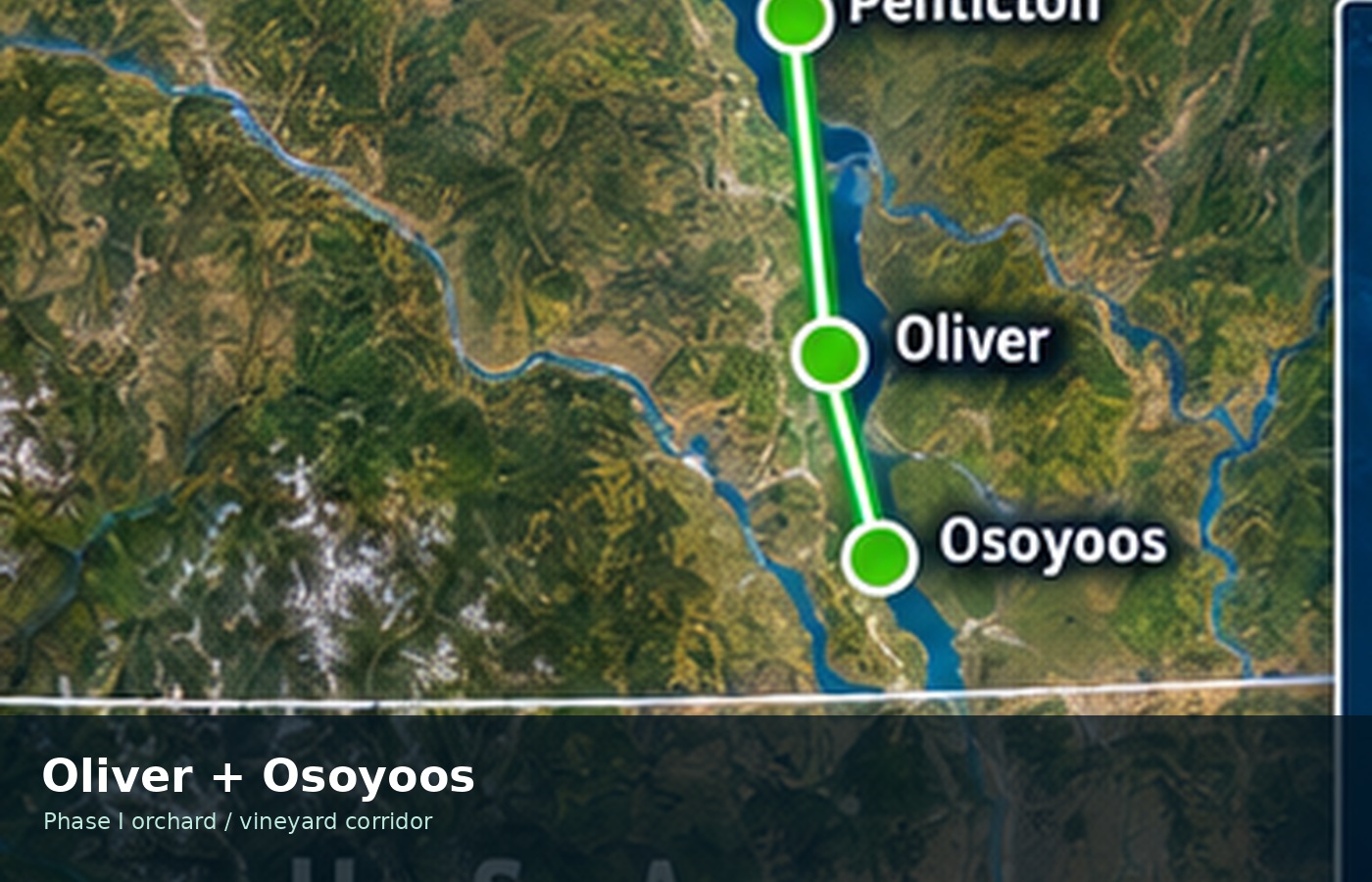
| Oliver | 5–12 MW | Vineyard/fruit heat uses, greenhouse | Intensive agriculture and strong solar resource |
| Osoyoos | 5–12 MW | Greenhouse, drying, cold-chain | Southern terminus; hot dry climate |
At the midpoint of these ranges, Phase I is roughly a 130 MW class concept. The final build could be materially smaller or larger.
A site that cannot use or economically reject its heat should not be oversized just to hit a compute target.
Secure greenhouse, processing, aquaculture or district-heat demand with a realistic hourly/seasonal profile.
Confirm electrical connection, redundancy, carrier diversity and route constructability.
Size the first data hall to the reliable heat sink, then expand as additional users connect.