Vegetables
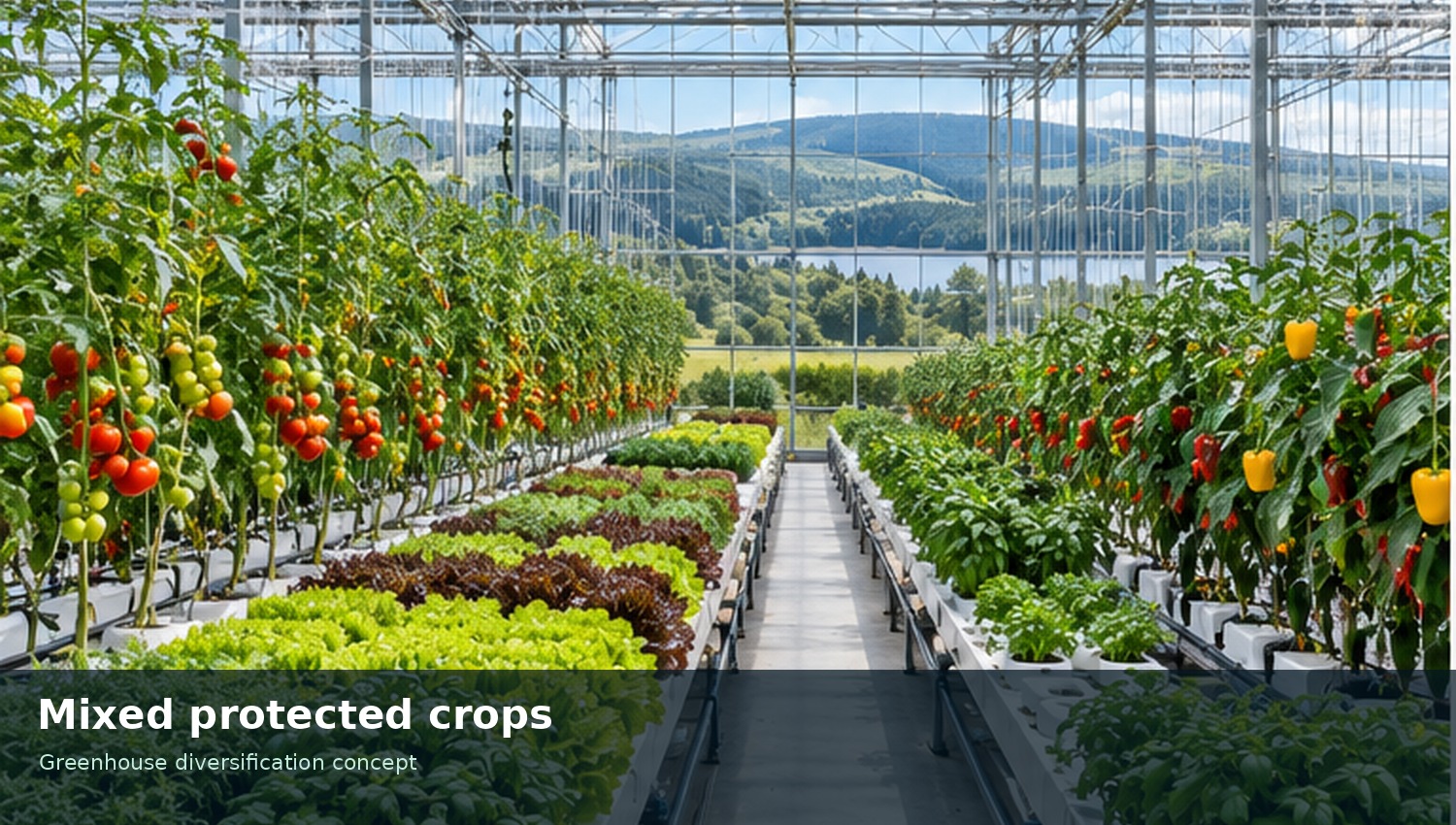
Tomatoes, cucumbers, peppers, lettuce, herbs and specialty crops selected by each operator.
The farms are not decorative add-ons. They are the primary productive sink for server heat, with crop selection and thermal storage matched to data-centre operation.
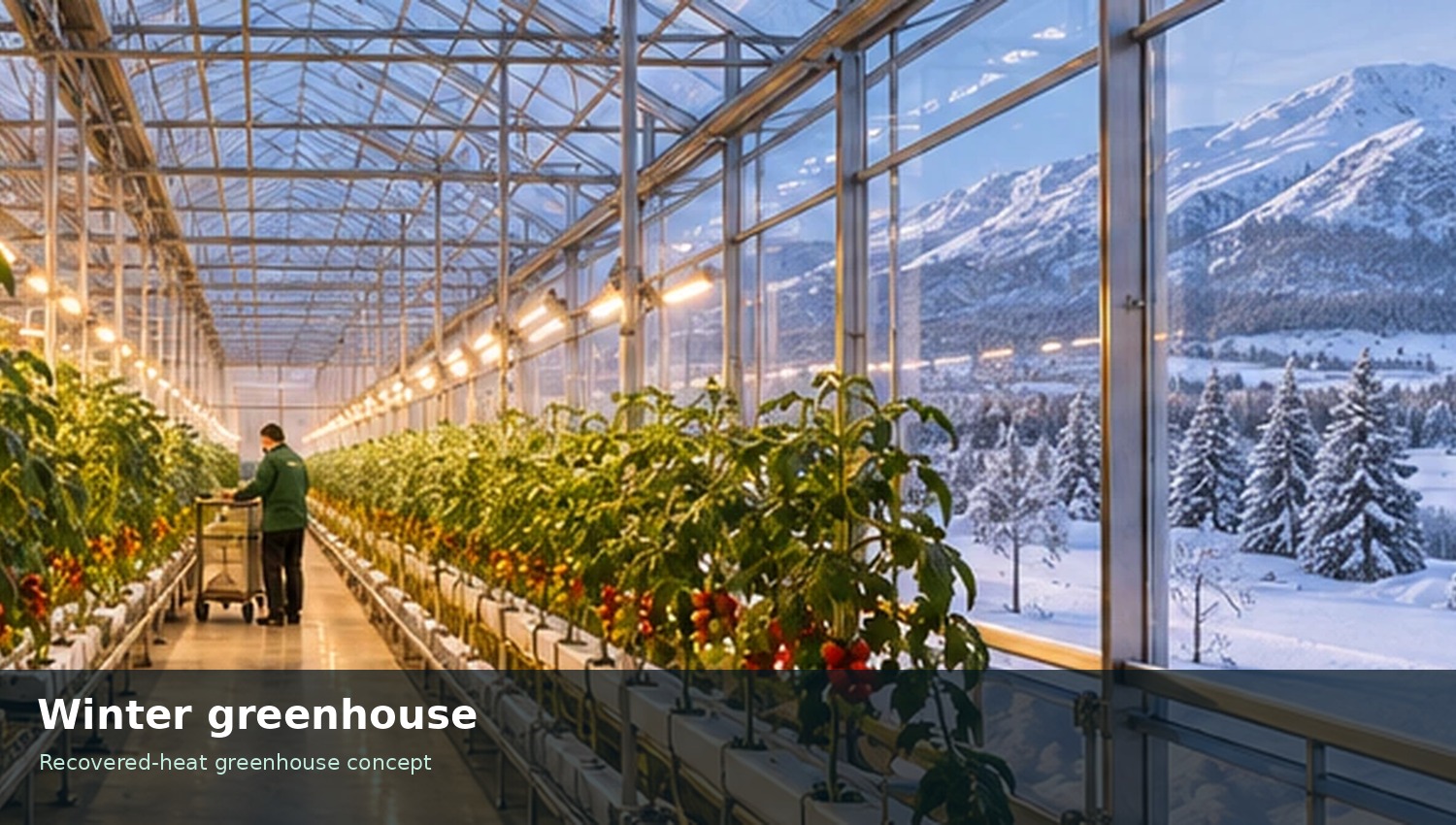
Winter is when greenhouses need the most thermal energy and solar output is weaker. Server heat is steady, which makes it valuable as a base heat source when paired with storage and backup systems.
Tomatoes, cucumbers, peppers, lettuce, herbs and specialty crops selected by each operator.
Nursery production, propagation and resilient local supply for farms and restoration programs.
Where permits and economics support it, warm-water loops can pair fish or prawn production with greenhouse nutrients.
Lower-temperature heat can support fruit dehydration, wash water, pre-heating and other food-processing loads.
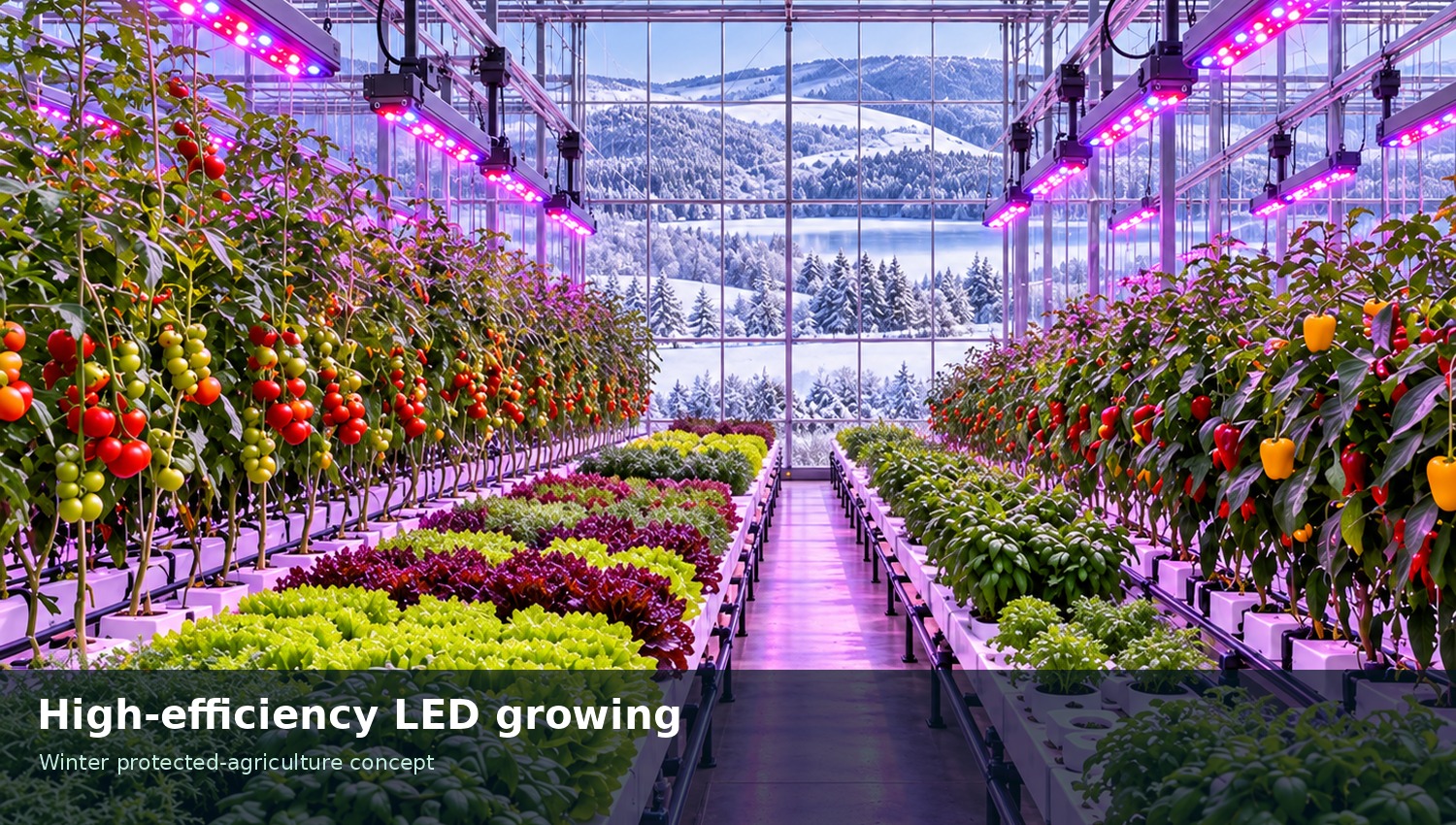
The Interior has strong natural sunlight, so the base design is a high-transmission greenhouse with efficient thermal screens and targeted supplemental LEDs rather than assuming full indoor vertical-farm lighting. In winter and shoulder seasons, movable LED bars or panels can extend photoperiods and stabilize quality.
Greenhouses should use condensate recovery, drain-water treatment and recirculating irrigation where agronomically appropriate. Data-centre liquid loops remain separate from food and irrigation loops through heat exchangers.