Direct liquid cooling
Warm-water liquid loops improve heat capture and reduce dependence on high-airflow fan systems.
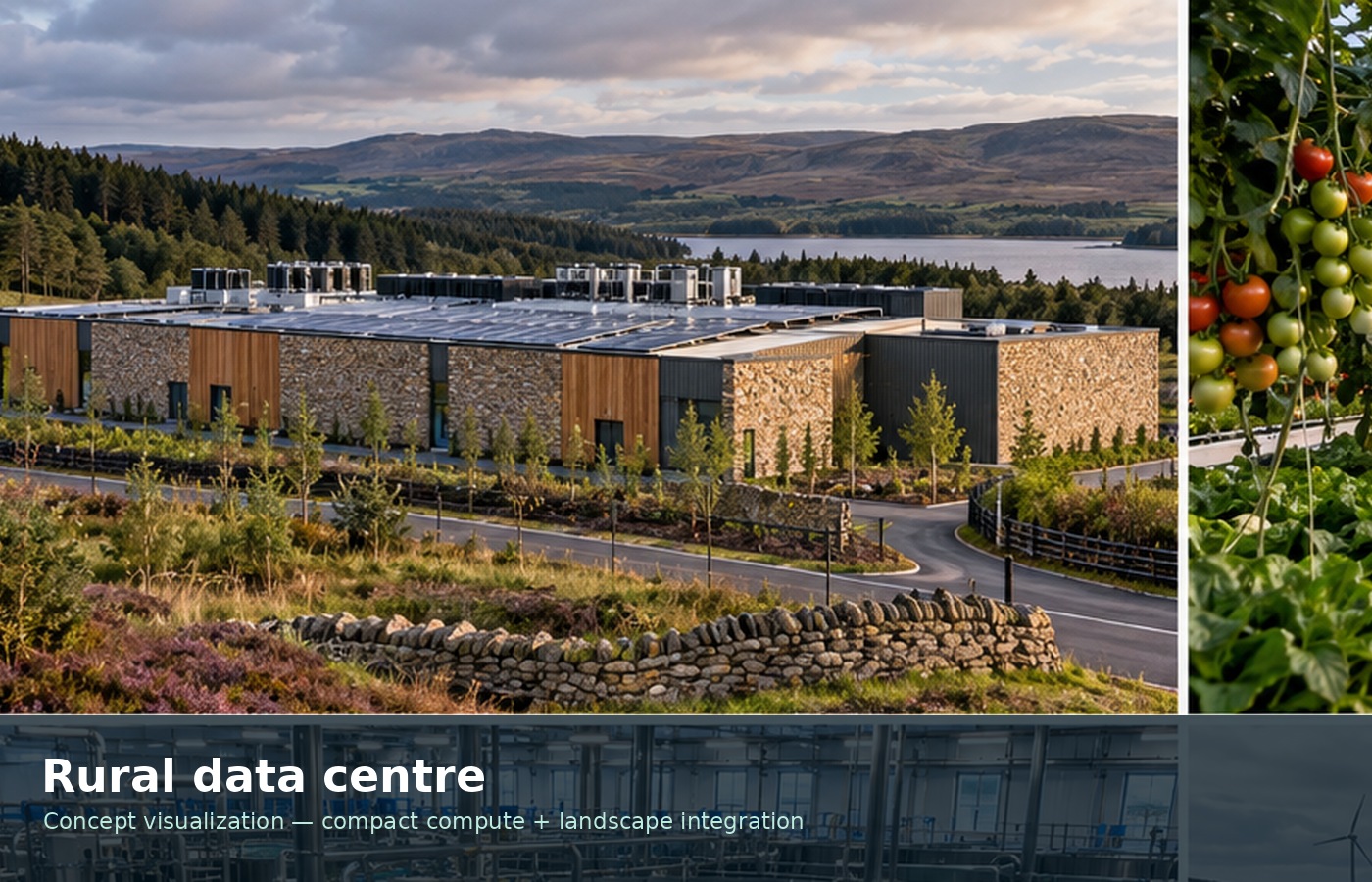
Modular, liquid-cooled AI infrastructure with recovered heat, dry-cooler backup and a dedicated optical fabric between towns.
Warm-water liquid loops improve heat capture and reduce dependence on high-airflow fan systems.
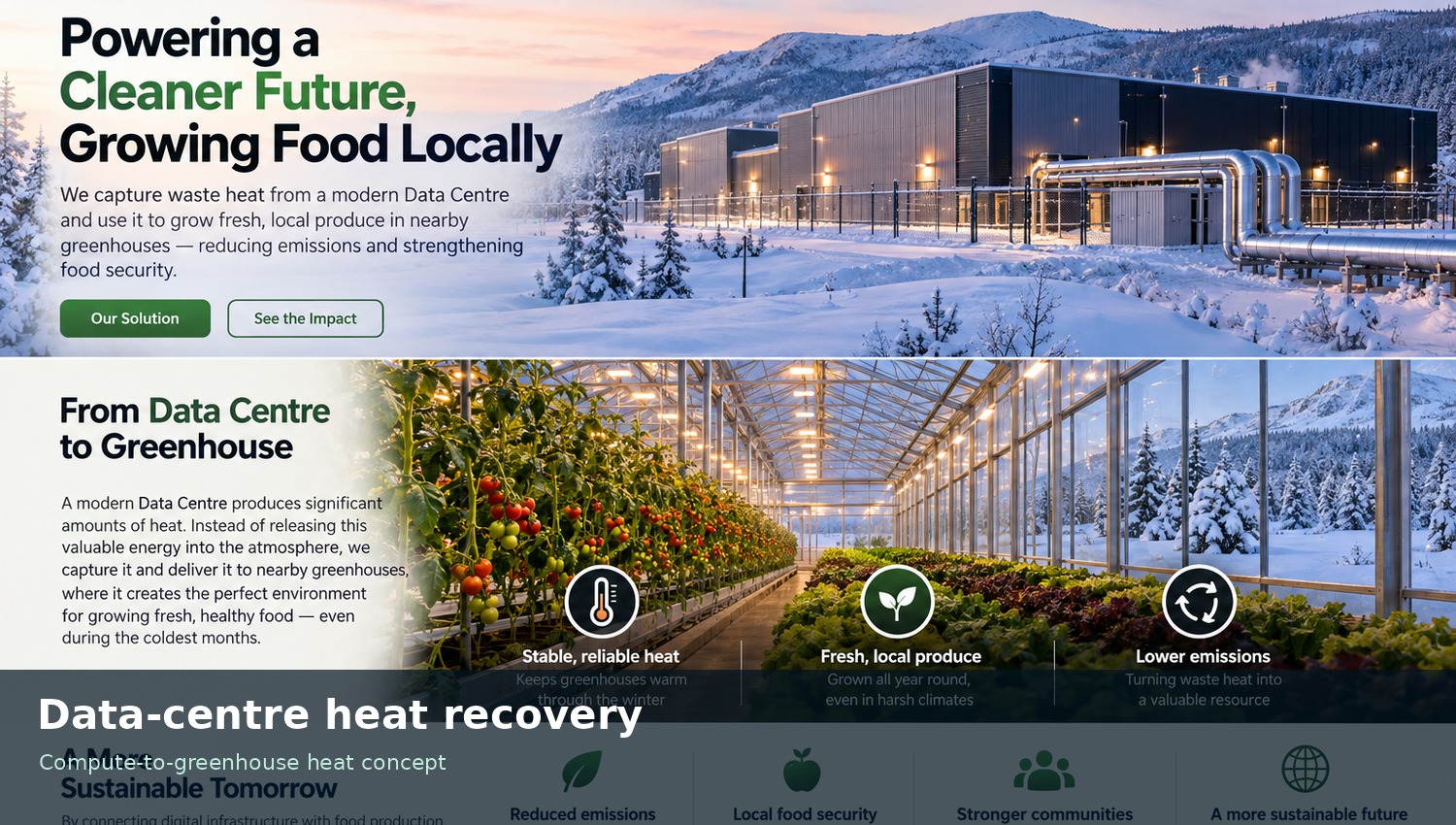
Greenhouse heating, wash/process water and district loops take priority; dry coolers reject only what cannot be economically used.
Dedicated fibre and wavelength services connect sites for distributed workloads, replication and regional scheduling.
A continuously loaded 10 MW IT block consumes 87.6 GWh of IT electricity per year. Nearly all of that electrical energy ultimately becomes heat. After allowing for capture, piping and end-use losses, a practical screening range of roughly 65–80 GWh/year of useful low-temperature heat is reasonable for early planning. Final numbers depend on coolant temperatures, annual load factor, heat-user return temperatures and distance.
This is an energy-balance screening example, not a guarantee of saleable heat. Summer heat demand can be much lower than winter demand, so storage and alternate heat sinks matter.
Distributed sites trade some campus-scale economies for better access to existing heat users, smaller interconnection steps and phased capital deployment.