Clean grid first
British Columbia’s hydro-dominated grid provides the backbone; Interior solar can supplement the dry, sunny Phase I corridor.
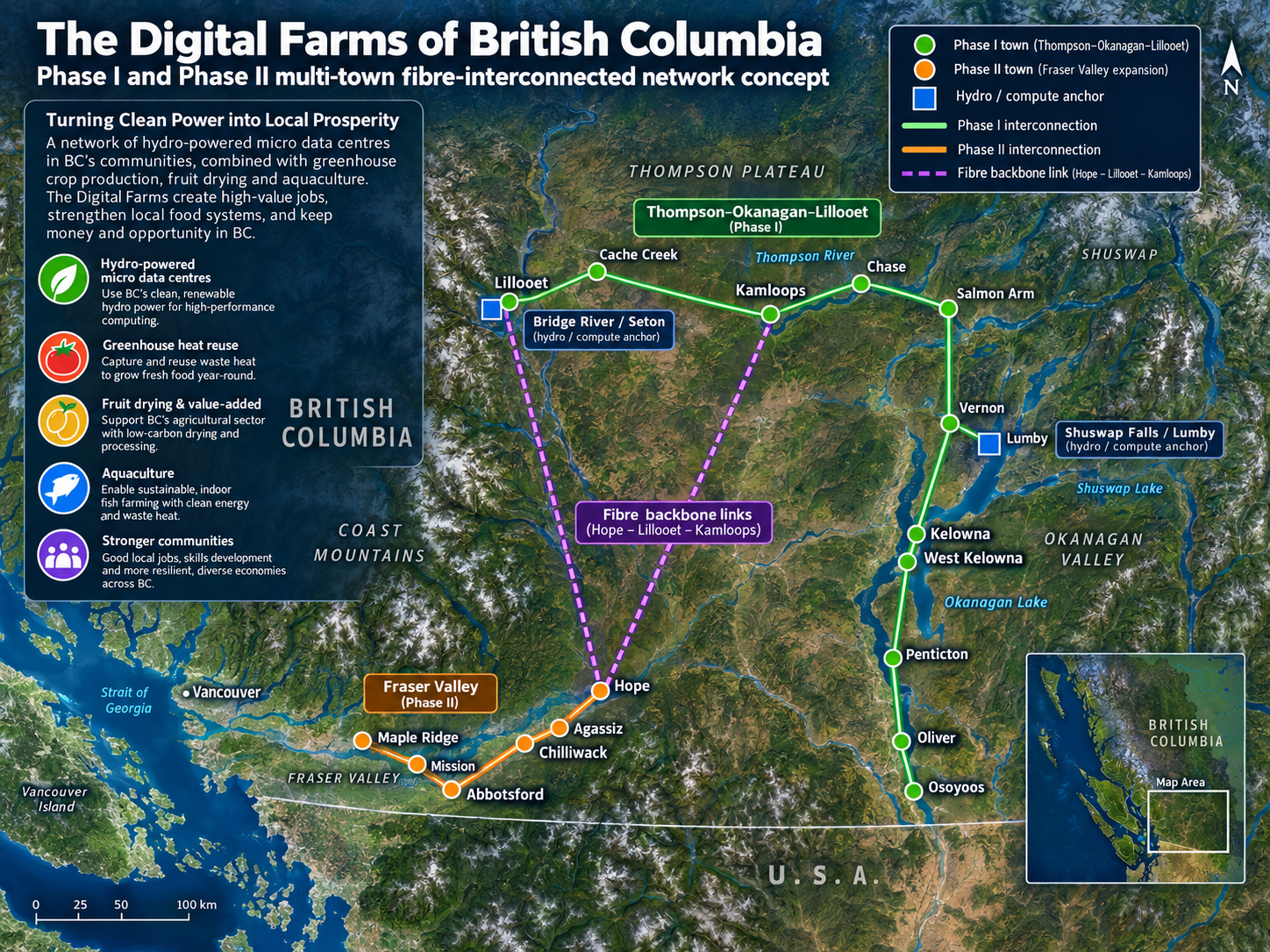
A proposed British Columbia network where clean electricity powers distributed data centres, recovered heat supports greenhouses and food processing, and dedicated fibre links communities into one regional compute fabric.
Instead of rejecting server heat to the atmosphere and importing separate heat for agriculture, the project co-locates compute, heat users, food systems, storage and local services.
British Columbia’s hydro-dominated grid provides the backbone; Interior solar can supplement the dry, sunny Phase I corridor.
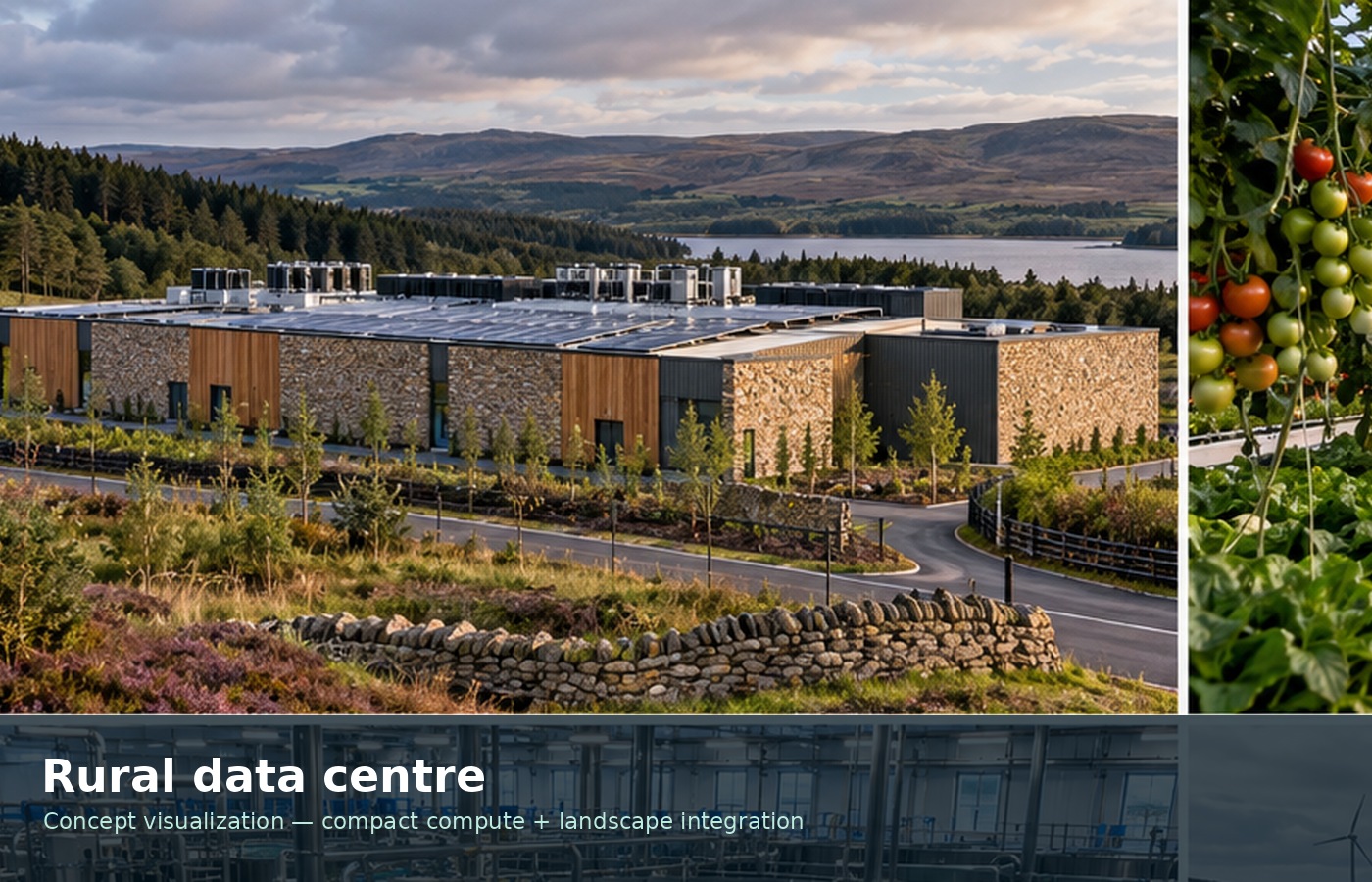
Modular edge-scale data centres are sized to local grid, fibre, land and heat demand rather than forcing every load into one mega-campus.
Liquid-cooled compute makes low-grade heat easier to capture for greenhouses, aquaculture, drying, wash-water and district loops.
Year-round production extends growing seasons, reduces exposure to smoke, frost and heat extremes, and turns energy infrastructure into local food infrastructure.
“The best data centre heat-rejection system is one that sells or uses the heat before it ever reaches a cooling tower.”
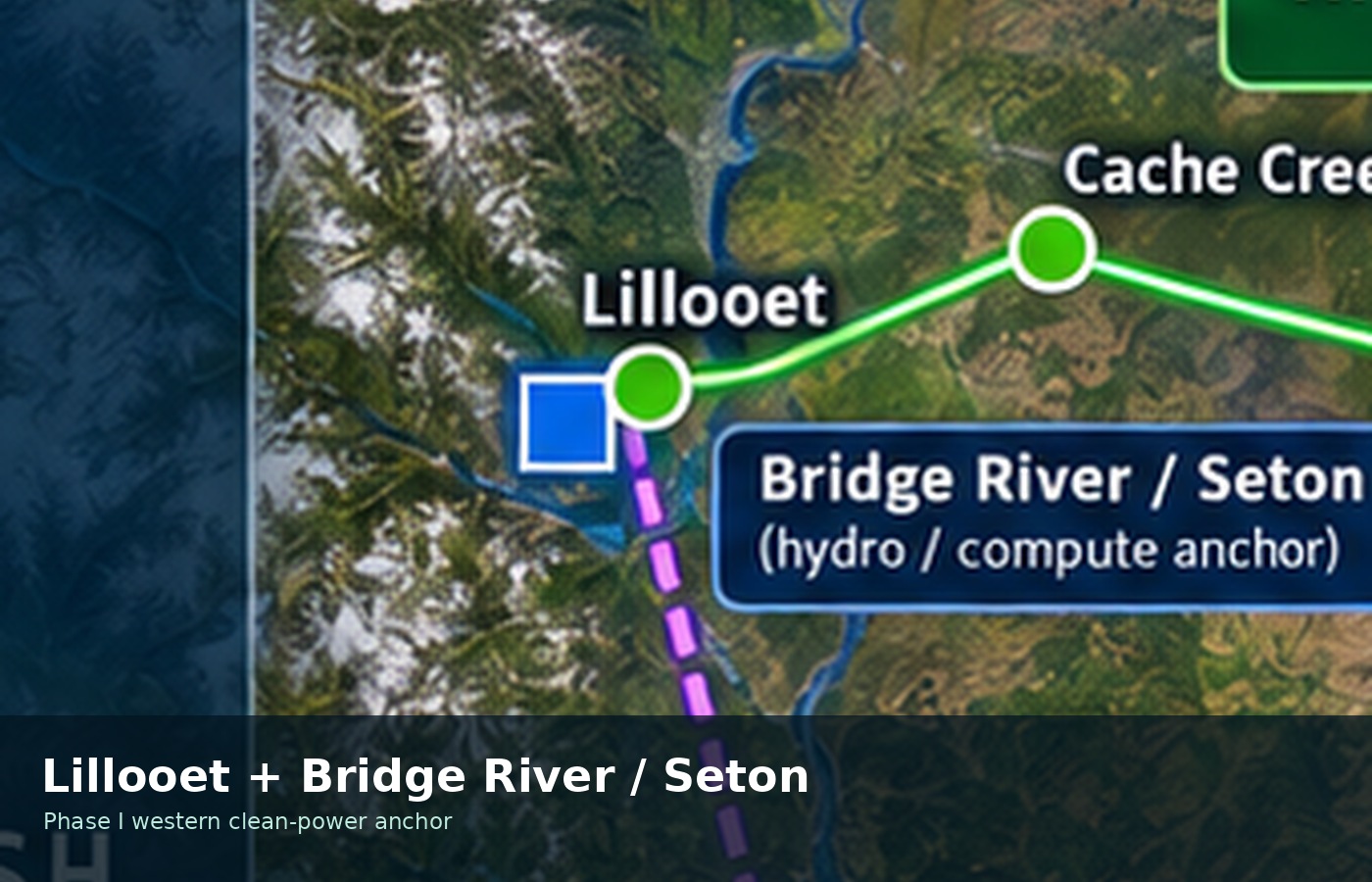
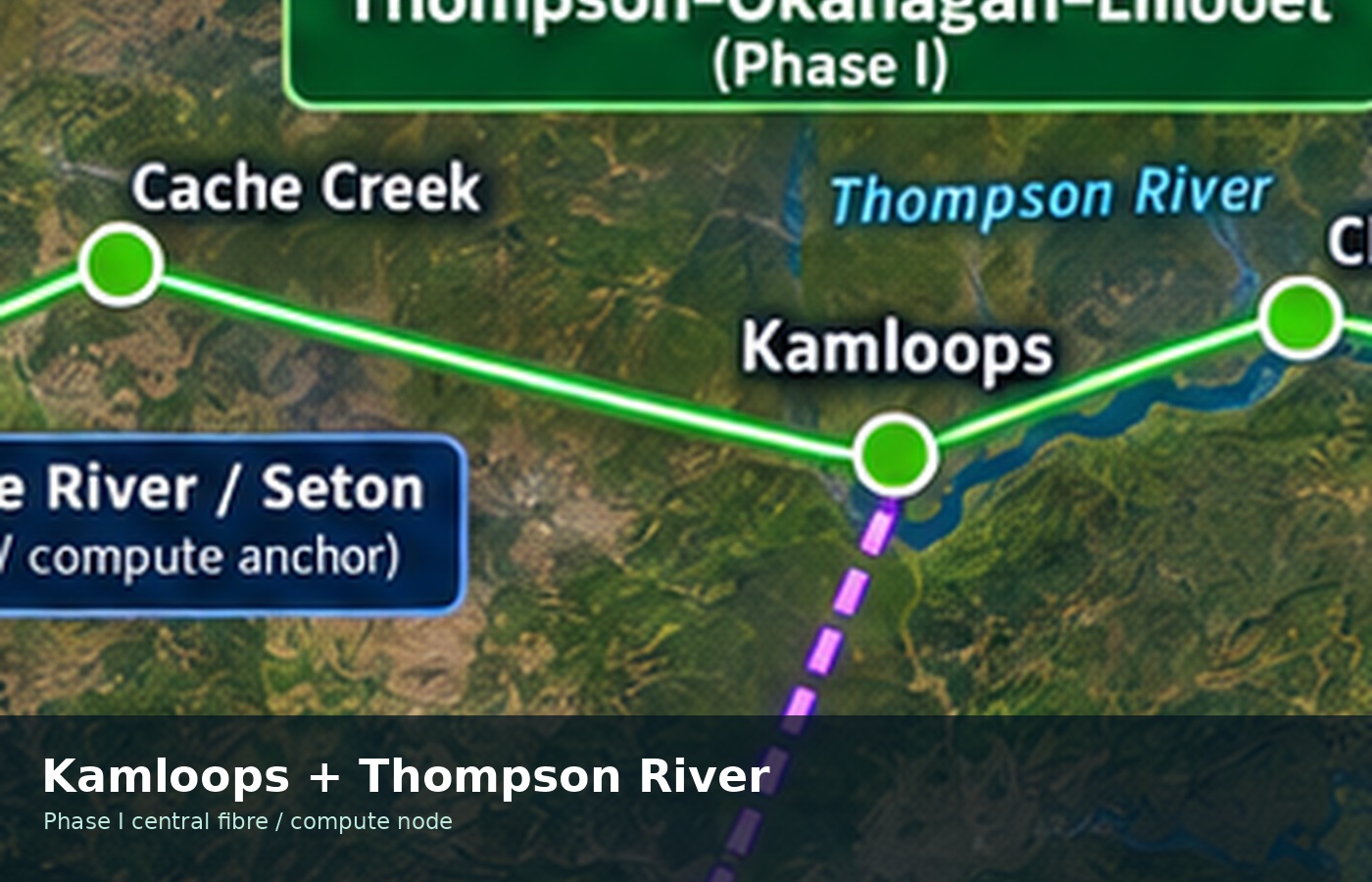
Ten principal community nodes follow the Interior corridor from the Fraser canyon through Kamloops and the Shuswap, then south through the Okanagan.
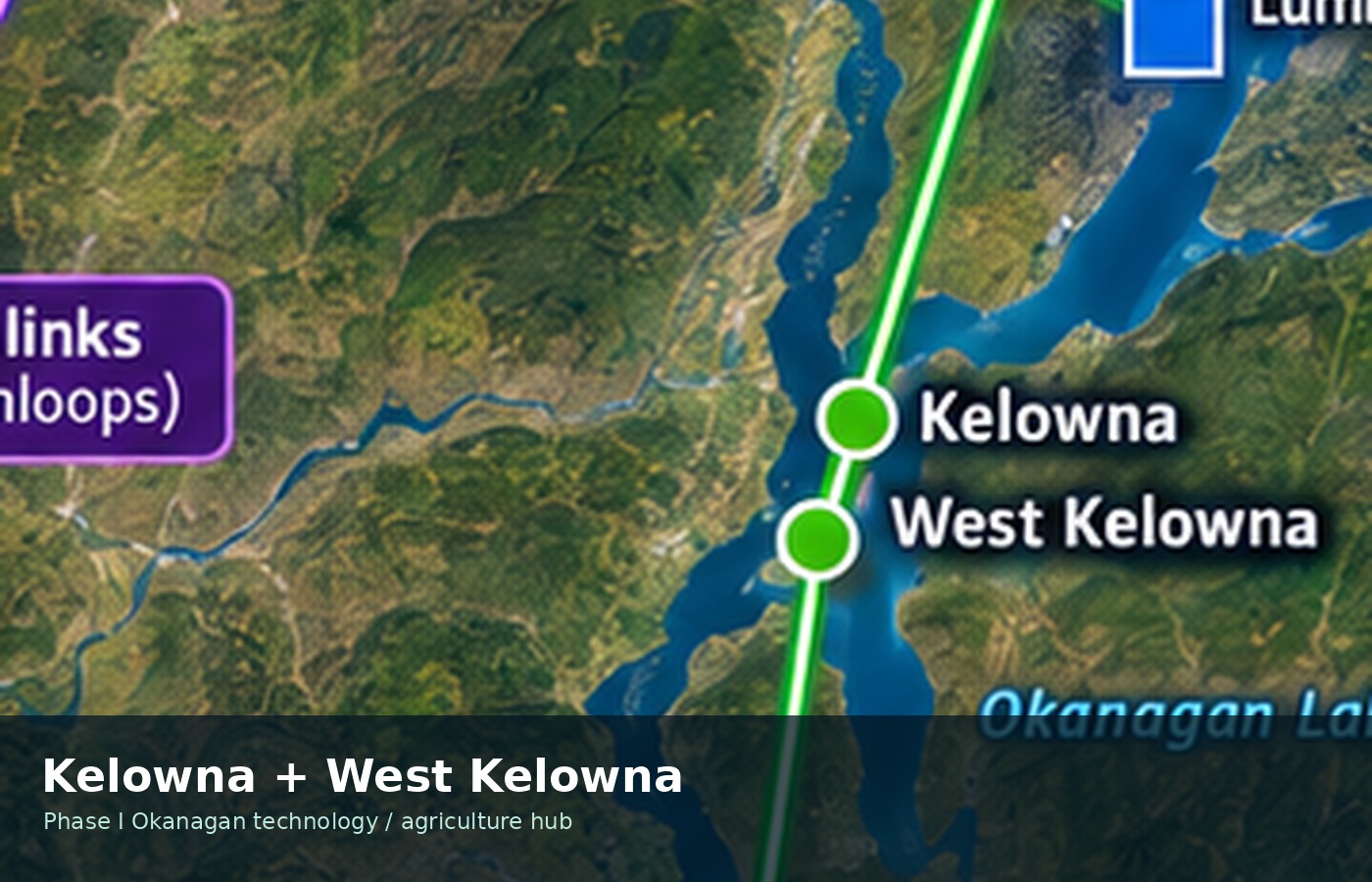
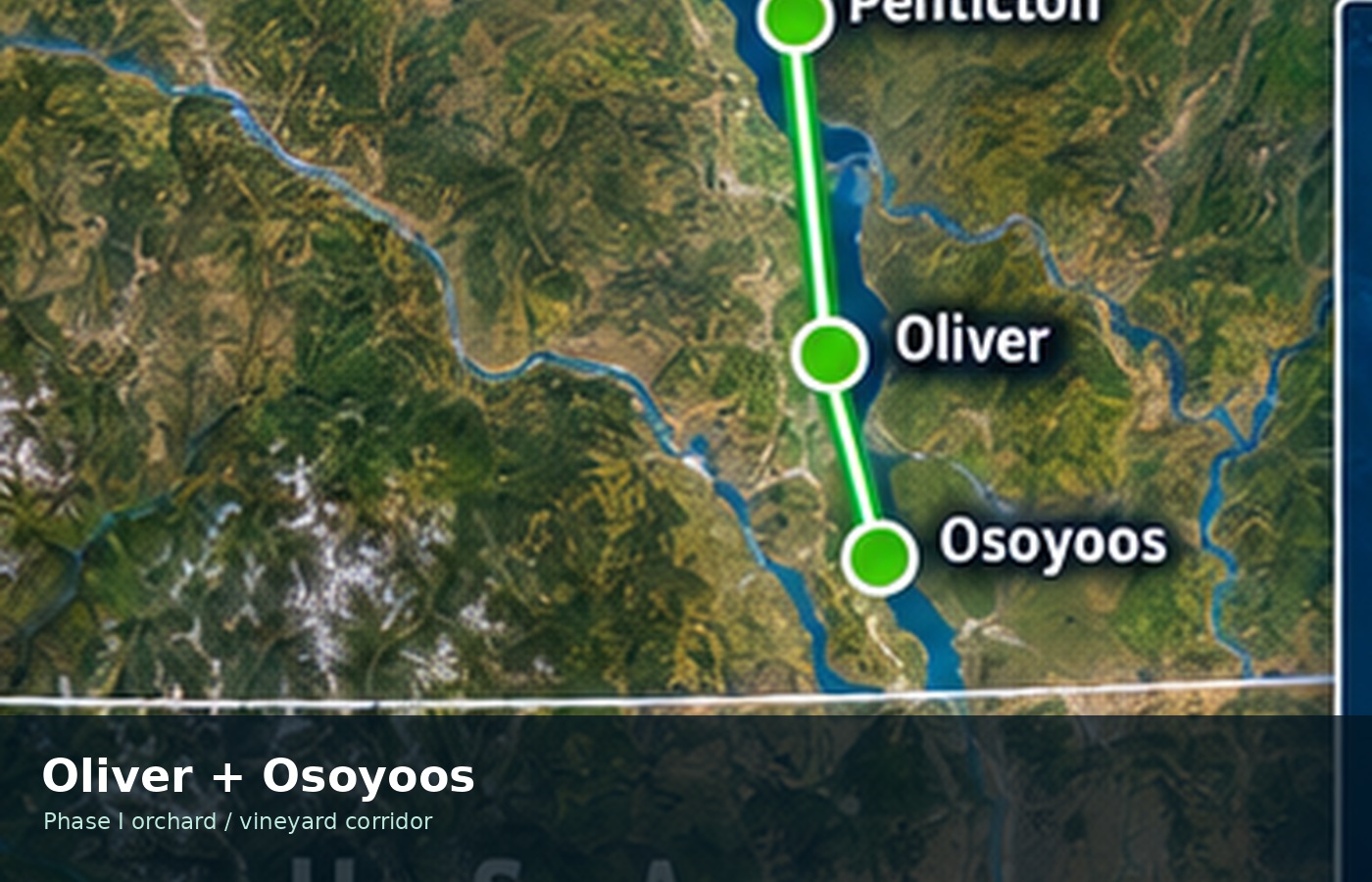
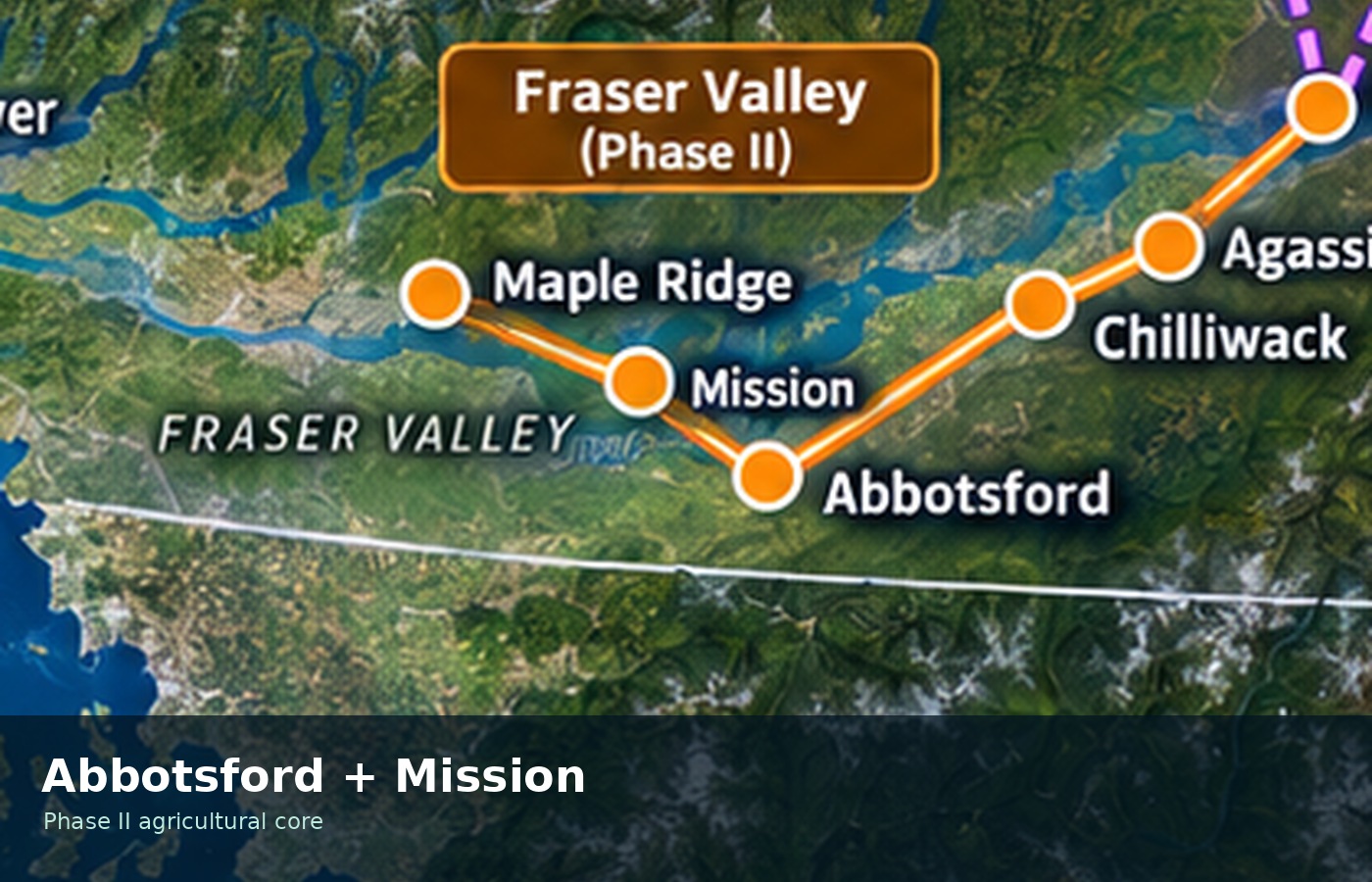
Hope, Chilliwack, Abbotsford, Mission and Maple Ridge extend the system into one of Canada’s most important greenhouse and agricultural regions, with a fibre handoff toward Metro Vancouver.
The benefit model is meant to be negotiated locally rather than imposed from outside.
Qualified local residents first, apprenticeship pathways, and a proposed wage target at least 10% above comparable local market midpoints.
Community greenhouse allocations, food-processing partnerships and low-cost recovered-heat programs can be structured as site-specific benefits.
Municipal, First Nations, co-operative or community benefit participation can be negotiated before final investment decisions.
The website ships with its own high-resolution B.C. network graphics and infrastructure visual library — no missing hot-linked hero photographs.